
Have you ever felt a sharp, shooting pain travel from your buttock down into your leg? If so, you’ve likely turned to Google and found two main suspects: Sciatica and Piriformis Syndrome.
Because both conditions involve the sciatic nerve, the symptoms feel almost identical. However, the cause of the pain is very different—and treating the wrong one can actually make your symptoms worse.
In this guide, we’ll look at three simple ways you can help differentiate between the two at home.
The Core Difference: Where is the Pinch?
Before we test, it helps to understand the anatomy:
- Sciatica: Usually starts in the Lower Back (Lumbar Spine). A disc or bone spur is likely “pinching” the nerve at its source.
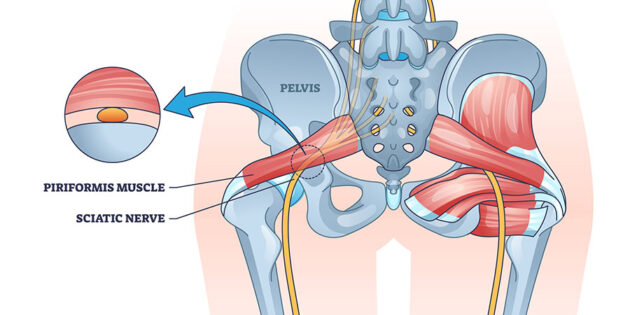
- Piriformis Syndrome: Starts in the Buttock. A small muscle called the piriformis (located deep in the glute) has become tight or inflamed, compressing the sciatic nerve as it passes underneath it.
3 Ways to Tell the Difference
1. The “Source of Origin” Test
Where did the pain start?
- Sciatica: If your leg pain is accompanied by lower back stiffness or if you feel the pain “travel” starting from your spine, it is likely a true sciatica issue originating in the discs.
- Piriformis Syndrome: If the pain is centered squarely in the middle of your buttock and you have no history of back pain, the muscle is the more likely culprit.
2. The Seated “Slump” Test
This is a common clinical test used by physical therapists to see if the problem is coming from the spinal cord/discs.
- How to do it: Sit on a chair and slump your shoulders forward. Bring your chin to your chest. Slowly straighten the leg that hurts.
- The Result: If straightening your leg while “slumped” causes a sharp zing or increased pain, it points toward Sciatica (nerve tension from the back). If the pain doesn’t change much with your head position, it may be the muscle.
3. The “FAIR” Stretch (The Piriformis Test)
This test specifically targets the piriformis muscle to see if it triggers your symptoms.
- How to do it: Lie on your back. Cross your aching leg over your straight leg so your ankle rests on the opposite knee (like a “Figure 4”). Now, gently pull your knee toward your opposite shoulder.
- The Result: If this specific stretch in the glute creates that familiar “shooting” pain down your leg, it’s a classic sign of Piriformis Syndrome.
Why the Distinction Matters
If you have a herniated disc (Sciatica) and you start doing aggressive glute stretches, you might actually put more tension on the nerve and increase your pain. Conversely, if you have Piriformis Syndrome, back exercises won’t touch the root of the problem.
When to See a Professional
Self-tests are a great starting point, but the sciatic nerve is the largest nerve in your body—it isn’t something you want to guess with.
You should seek a professional physical therapy evaluation if:
- The pain is preventing you from sleeping.
- You feel weakness in your foot (tripping or “Foot Drop”).
- The pain has lasted more than two weeks.
Get a Definitive Answer at Intecore Physical Therapy
Stop guessing and start healing. Our specialists can perform a full diagnostic screen to pinpoint exactly where your nerve is being compressed and create a customized plan to get you back to your active life.
[Click here to Inquire About Cost & Availability] or [Schedule Your Discovery Visit]

- How To Sleep with Sciatica and Back Pain - February 12, 2026
- Postpartum Joint Pain? 7 Fast Relief Tips for Busy New Moms. - February 3, 2026
- Sciatica or Piriformis Syndrome? 3 Ways to Tell the Difference (Self-Test Guide) - December 22, 2025
You Might Also Like...
-
 February 11, 2024
 -
 October 11, 2018
 -
 May 24, 2016