
Rotator cuff surgery recovery takes 4 to 6 months for most patients to return to daily activities, and up to 12 months to regain full strength and return to overhead sport or heavy physical work. Physical therapy typically begins 4 to 6 weeks after surgery once the repaired tissue has started to heal. The sling phase is the hardest part mentally — but how you rehabilitate after that determines how well you get back to the activities you love.
Rotator cuff surgery is one of the more demanding recoveries in orthopaedic rehab. Not because the surgery itself is particularly dramatic, but because the shoulder is involved in almost everything you do — reaching for something overhead, pulling a door closed, sleeping on your side, throwing a ball, swinging a club.
When that shoulder is in a sling and off limits for weeks at a time, it affects your whole life. And when the PT phase finally starts, it can feel slow, frustrating, and at times discouraging.
I want to give you an honest picture of what the recovery actually looks like, what physical therapy involves at each stage, and what separates the patients who come out of this procedure strong from the ones who plateau halfway through.
One of our patients at Intecore came in after open shoulder surgery following multiple dislocations. He could not move his arm for the first month. With the right rehabilitation plan, he progressed from zero arm movement to full strength and range of motion — and called it the best his shoulder had felt in years. That kind of outcome is achievable. But it requires the right approach from day one.
Table of Contents
What Is Rotator Cuff Surgery and Why Does Recovery Take So Long?
The rotator cuff is a group of four muscles and their tendons that surround the shoulder joint, holding the ball of your upper arm securely in the socket and powering rotation and overhead movement. When one or more of those tendons tears — either from a sudden injury or gradual wear — surgery is sometimes needed to repair it.
Most rotator cuff repairs are performed arthroscopically — through small incisions using a camera — which reduces trauma to surrounding tissue. Open repairs are less common and typically reserved for larger or more complex tears.
The reason recovery takes months rather than weeks comes down to biology. The repaired tendon is reattached to bone during surgery, but the process of that tendon actually growing back into the bone — called tendon-to-bone healing — takes 10 to 12 weeks at minimum. During that period, the repair is vulnerable. Move too aggressively too soon and you risk re-tearing the tendon before it has fully integrated.
That is why the early weeks are frustratingly passive. It is not about being overcautious. It is about protecting a repair that cannot be rushed.
When Does Physical Therapy Start After Rotator Cuff Surgery?
This is different from knee replacement, where PT starts the day of surgery. With rotator cuff repair, the timing of physical therapy depends on the size of the tear and your surgeon’s protocol.
For most patients, formal physical therapy begins 4 to 6 weeks after surgery. In the weeks before that, movement is restricted and the arm is kept in a sling. Some surgeons allow very gentle pendulum exercises from day one — small, gravity-assisted circles that keep fluid moving in the joint without loading the repair. Your PT may begin gentle passive range of motion work in the first few weeks depending on your surgeon’s clearance.
The key word in early PT is passive — your arm moves, but your repaired muscles are not the ones doing the work yet. That comes later.
Rotator Cuff Surgery Recovery Week by Week
Recovery from rotator cuff surgery moves through four distinct phases. Understanding what each phase is trying to achieve helps you stay patient when progress feels slow — and push appropriately when it is time to work harder.
Phase 1 — Weeks 1 to 6: Protecting the Repair
The arm is in a sling for most or all of this phase. Pain and swelling are managed with ice and medication. The primary goal is protecting the repaired tissue while it begins to heal.
What you can do: pendulum exercises, gentle elbow and wrist movement, grip strengthening, and basic daily tasks that do not load the shoulder. What you cannot do: lift anything with the surgical arm, reach across your body, or use the arm to push yourself up from a chair or bed.
This phase tests patience more than anything else. Patients who push through the restrictions at this stage are the ones who end up back in surgery.
Phase 2 — Weeks 6 to 12: Restoring Range of Motion
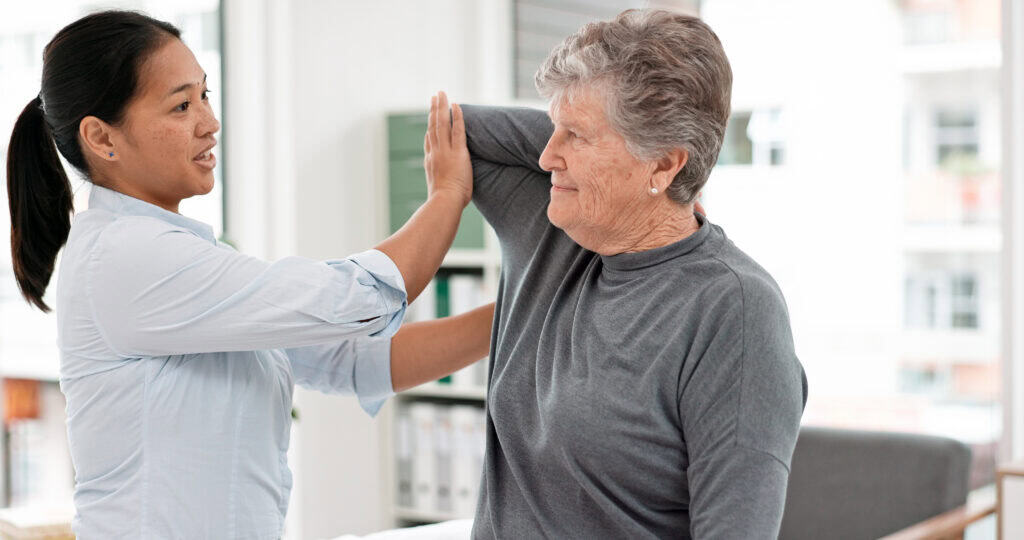
This is when formal outpatient PT begins for most patients. The sling comes off or is used only at night. The focus shifts to restoring passive and then active range of motion — getting the shoulder moving through its full range without pain or compensation.
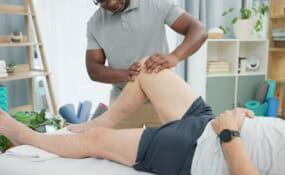
Your PT will use hands-on manual therapy to release stiffness and restore joint mobility, along with progressive stretching and guided movement exercises. Strengthening is still limited at this stage — the tendon is not ready for heavy loading yet.
Goals by week 12: full or near-full passive range of motion in all directions, reduced pain with daily activities, ability to use the arm for light tasks at or below shoulder height.
Phase 3 — Weeks 12 to 20: Building Strength
This is where the real work starts. The tendon has healed sufficiently to tolerate progressive loading, and the focus shifts from mobility to building the strength and endurance the shoulder needs to function properly.
Rotator cuff strengthening, scapular stabilisation, and functional movement patterns are the foundation of this phase. For athletes and active adults, sport-specific movements begin to be introduced toward the end of this phase — controlled throwing progressions for baseball or softball players, overhead patterns for swimmers or tennis players, and so on.
This phase requires consistency. Two to three PT sessions per week plus a home exercise program is typical. The patients who do the work between sessions progress significantly faster than those who rely on clinic time alone.
Phase 4 — Months 5 to 12: Return to Full Activity
The final phase of recovery is about returning to everything the shoulder needs to do in your life. Full overhead activity, sport, heavy lifting, or physically demanding work. Most patients are cleared for light sport by month four to six, and full return to overhead sport or heavy manual work by month nine to twelve.
At Intecore, we do not just discharge patients when they hit a basic functional milestone. We make sure the shoulder is strong enough for what you actually want to do with it — whether that’s getting back on the tennis court, throwing with your kids, or returning to work in a physically demanding role.
How Long Is Rehab for Rotator Cuff Surgery?
Formal outpatient physical therapy typically runs 3 to 4 months, with sessions two to three times per week. Some patients — particularly those with larger tears, significant pre-surgical weakness, or high return-to-sport demands — benefit from a longer program.
The total rehabilitation journey from surgery to full recovery is 6 to 12 months for most patients. That timeline feels long when you are in it. But the shoulder is a complex joint with high demands, and cutting the rehab process short is one of the primary reasons patients end up with persistent weakness, re-tears, or chronic stiffness.
What Does Physical Therapy for Rotator Cuff Surgery Actually Involve?
A good rotator cuff rehab program is built around your specific tear, your surgery, your current function, and what you want to get back to. Here is what the core components look like at Intecore.
- Manual therapy: Hands-on joint mobilisation, soft tissue work, and scar tissue management to restore mobility and reduce stiffness faster than exercise alone.
- Passive and active range of motion: Carefully progressed movement work to restore the shoulder’s full range without overloading the healing tendon.
- Rotator cuff strengthening: Targeted exercises for the four rotator cuff muscles — supraspinatus, infraspinatus, teres minor, and subscapularis — progressed based on healing stage and tolerance.
- Scapular stabilisation: The scapula is the platform the shoulder moves off. Weak scapular muscles mean poor mechanics and excessive stress on the repaired tendon. This is a critical and often undertreated component of shoulder rehab.
- Functional and sport-specific training: In the later phases, exercises are matched to the demands of your sport or daily life — not just generic shoulder movements.
- Home exercise program: What you do between sessions is just as important as what happens in the clinic. We build a home program you can realistically do and progress it as you improve.
Does Tear Size Affect Recovery Time?
Yes — significantly. Here is a general guide.
- Small to medium tear (less than 3cm): Return to most daily activities by 4 to 5 months. Full recovery and return to sport typically 6 to 9 months.
- Large tear (3 to 5cm): Return to daily activities by 5 to 6 months. Full recovery 9 to 12 months.
- Massive tear (greater than 5cm): Recovery is longer and outcomes more variable. Full recovery can take 12 months or more, and return to overhead sport is not always guaranteed depending on tissue quality.
Your surgeon should have given you a sense of tear size and complexity after the procedure. If you are not sure, ask — it directly shapes what your rehab timeline should look like.
Getting Your Shoulder Back to Full Strength in Southern California
At Intecore Physical Therapy, rotator cuff rehabilitation is one of the procedures our team has the deepest experience with. Across our clinics in Foothill Ranch, Aliso Viejo, and San Juan Capistrano, we have guided patients through every stage of shoulder recovery — from the frustrating early weeks in the sling through to full return to sport and activity.
We understand what you are going through. The shoulder dictates so much of daily life, and when it is not working right, everything feels harder. Our job is to make sure that when your surgeon clears you for PT, you have a plan that is built for your specific surgery, your specific goals, and your specific timeline.
Ready to get started? Fill out our quick inquiry form at intecorept.com/inquire or call us at (949) 597-2103. We will take it from there.
Frequently Asked Questions
How long does rotator cuff surgery recovery take?
Most patients return to daily activities within 4 to 6 months. Full recovery — including return to overhead sport or heavy physical work — typically takes 9 to 12 months. Tear size, patient age, and adherence to the rehab program are the biggest factors influencing this timeline.
When does physical therapy start after rotator cuff surgery?
Formal outpatient PT typically begins 4 to 6 weeks after surgery, once the surgeon is satisfied that the initial healing phase is on track. Very gentle passive exercises may begin earlier depending on your surgeon’s protocol. The key is not starting active strengthening too early — the repaired tendon needs time to reintegrate with the bone before it can tolerate loading.
How long is the sling phase after rotator cuff surgery?
Most patients wear a sling for 4 to 6 weeks after rotator cuff repair. Larger tears may require longer immobilisation. Your surgeon will determine the exact duration based on the size and complexity of the repair. Do not discontinue the sling early without clearance — it is protecting a repair that cannot be seen from the outside.
Is it normal to still have pain at 3 months after rotator cuff surgery?
Yes. At 3 months, most patients still have some pain — particularly with certain movements or after exercise. The shoulder is still in an active healing phase at this point. Pain that is gradually improving is normal. Pain that is suddenly getting worse, or pain accompanied by significant swelling or loss of function, warrants a call to your surgeon.
Can I do physical therapy at home after rotator cuff surgery?
A home exercise program is an essential part of rotator cuff rehab — but it works alongside in-clinic PT, not instead of it. The hands-on manual therapy, progressive loading, and movement assessment that happens in a clinical setting cannot be replicated at home. Patients who do only home exercises consistently achieve inferior outcomes compared to those who combine clinic PT with a solid home program.
When can I return to sport after rotator cuff surgery?
Return to non-overhead sport is typically possible around 4 to 6 months. Return to overhead sport — throwing, swimming, tennis, volleyball — generally requires 9 to 12 months. Your PT will guide you through sport-specific progressions and help determine when you are genuinely ready, not just when the calendar says you should be.
What happens if I skip physical therapy after rotator cuff surgery?
Skipping PT after rotator cuff surgery significantly increases the risk of permanent stiffness, persistent weakness, and re-tear. The repaired tendon needs progressive loading to heal correctly — without it, scar tissue builds up, muscle atrophy worsens, and the shoulder never regains proper mechanics. PT is not optional for a good outcome. It is the recovery.
Sources
JOSPT — Rotator Cuff Rehab Guidelines https://www.jospt.org/doi/10.2519/jospt.2018.0302
AAOS — Rotator Cuff Tears https://orthoinfo.aaos.org/en/diseases–conditions/rotator-cuff-tears/
NIH — Outcomes After Rotator Cuff Repair https://pubmed.ncbi.nlm.nih.gov/27517806/
Mayo Clinic — Rotator Cuff Injury https://www.mayoclinic.org/diseases-conditions/rotator-cuff-injury/symptoms-causes/syc-20350225
APTA — Shoulder Clinical Practice Guidelines https://www.apta.org/patient-care/evidence-based-practice-resources/cpg/shoulder-pain

- Rotator Cuff Surgery Recovery: What to Expect Week by Week (And How PT Gets You Back to Full Strength) - March 31, 2026
- Should You Do Physical Therapy Before Knee Surgery? Here’s What the Research Says - March 31, 2026
- Knee Replacement Recovery: What to Expect Week by Week (And Why Physical Therapy Makes All the Difference) - March 30, 2026
You Might Also Like...
-
 August 26, 2021
 -
 March 30, 2026
 -
 April 7, 2015