

How do you get rid of tension headaches naturally? The fastest natural relief comes from a combination of heat or cold to the neck, a short posture reset, targeted neck stretching, and hydration. These address the two most common drivers — muscle tension and dehydration — within 20–30 minutes. If headaches are recurring more than twice a week, self-care alone won’t fix the underlying cause.
That tight-band feeling across your forehead. The dull ache building at the base of your skull after a long day at your desk in Foothill Ranch or Aliso Viejo. The tension headache that shows up right on cue whenever your schedule gets busy.
You’re not imagining it — and you don’t have to just push through it. Here are seven natural approaches our physical therapists recommend, plus a clear guide on when it’s time to get professional help.
Table of Contents
What Is a Tension Headache?
A tension headache produces a dull, pressing pain — usually on both sides of the head — that feels like a tight band or vice around the forehead and temples. Unlike migraines, tension headaches don’t typically cause nausea or light sensitivity, and they don’t throb. They linger. Sometimes for hours, sometimes days.
They’re also the most common type of headache — affecting the majority of adults at some point, according to the Mayo Clinic.
What Causes Tension Headaches?
The root cause is muscle tension — specifically in the neck, upper back, jaw, and the small muscles at the base of the skull. When these muscles tighten and stay tight, they refer pain upward into the head. Common triggers include:
- Poor posture, especially prolonged desk work or phone use
- Stress and jaw clenching
- Dehydration or skipping meals
- Eye strain from screens
- Disrupted sleep
- Sudden increase in physical activity without adequate warm-up
In Southern California’s active culture — where people often jump from desk jobs to trail running or gym sessions — this combination of sedentary posture and intense activity is a particularly common recipe for chronic tension headaches.
What Exactly Is a Tension Headache?
A tension-type headache typically feels like a constant, dull ache or pressure around your forehead, temples, or the back of your head and neck. Unlike migraines, tension headaches usually don’t cause nausea or visual disturbances, but they can linger for hours or days.
7 Natural Ways to Relieve Tension Headaches
1. Stretch Your Neck and Shoulders (Do This First)
Tight neck and shoulder muscles are the most direct driver of tension headaches. Two stretches that work quickly:
Neck side stretch: Slowly tilt your right ear toward your right shoulder. Place your right hand gently on the left side of your head — don’t pull, just let the weight add mild pressure. Hold 30 seconds. Switch sides.
Suboccipital release: Interlace your fingers behind your head at the base of your skull. Gently nod your chin slightly down and hold for 60 seconds. This targets the tiny muscles at the skull base that are almost always involved in tension headaches.
2. Reset Your Posture
Every inch your head sits forward of your shoulders adds roughly 10 pounds of load to your neck muscles. After a day of screens, most people’s heads are sitting 2–3 inches forward — that’s 20–30 pounds of constant strain pulling on the muscles that feed directly into headache territory.
Quick reset: sit tall, gently tuck your chin straight back (not down), and roll your shoulders back and down. Hold for 10 seconds, repeat 5 times. Do this every 45–60 minutes at your desk.
3. Apply Heat to Your Neck
A warm pack or heat pad applied to the back of your neck for 15–20 minutes relaxes the muscles that are driving the headache. This works particularly well if your headache starts at the base of the skull and creeps upward — a classic tension pattern.
Cold works better for some people, especially if there’s acute muscle spasm. Try both and notice which provides faster relief for your specific pattern.
4. Hydrate Immediately
Dehydration is a sneaky but very common headache trigger — especially in Southern California’s warmer climate. Your muscles need adequate water to function without cramping and referring pain.
If you haven’t drunk much water today, start with 16oz immediately and continue drinking throughout the afternoon. Many mild tension headaches resolve within 30–60 minutes of proper rehydration.
5. Take a Stress and Screen Break
Stress causes your muscles to contract and hold without you realising it — your jaw clenches, your shoulders creep toward your ears, your neck stiffens. This sustained muscle contraction is a direct headache trigger.
A 10-minute break away from screens, combined with slow diaphragmatic breathing (inhale for 4 counts, hold for 2, exhale for 6), can noticeably reduce both the stress response and the muscle tension driving your headache.
6. Check Your Sleep Position
Stomach sleeping forces your neck into sustained rotation for hours — one of the most reliable ways to wake up with a tension headache. Side sleeping with a pillow that keeps your neck level, or back sleeping with a low supportive pillow, dramatically reduces overnight neck tension.
7. Move — Even a Short Walk Helps
Gentle movement pumps blood through tight muscles and releases endorphins that naturally reduce pain. A 20–30 minute walk — along the trails at Aliso and Wood Canyons or simply around the block — can shift tension headaches more effectively than lying down and waiting for them to pass.
The Neck-Headache Connection
Many recurring tension headaches are actually cervicogenic headaches — meaning they originate from the cervical spine (neck), not the head itself. Joint stiffness, nerve irritation, or tight muscles in the upper neck can refer pain directly into the head in patterns that feel identical to a tension headache.
If your headaches consistently start at the back of your head, often occur on one side, or get worse with certain neck positions, the cervical spine is likely the primary driver — and stretching alone won’t fix it. This is where physical therapy becomes essential.
When to See a Physical Therapist for Tension Headaches
Self-care works well for occasional tension headaches. But it’s time to seek professional help if:
- You’re having more than 2 headaches per week
- Headaches last more than a day despite home management
- You’re relying on pain medication regularly
- Neck stiffness or pain accompanies every headache
- Headaches are affecting your work, sleep, or active lifestyle
- Self-care measures provide only temporary relief
At Intecore PT across Foothill Ranch, Aliso Viejo, and San Juan Capistrano, we identify the exact mechanical driver of your headaches and treat it — not just the pain. Most patients see significant improvement within 4–6 sessions.
Inquire about availability here or call us at 949-565-4944.
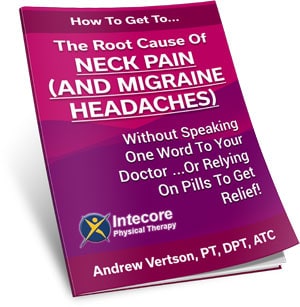
If you’re not ready to talk to us yet and you want more tips to help ease neck pain, click here to download our free tips guide:
Seek Emergency Care Immediately If Your Headache:
- Comes on suddenly and is the worst of your life
- Is accompanied by confusion, slurred speech, or vision changes
- Follows a head injury
- Includes numbness or weakness in your face or limbs
These can indicate a serious medical emergency, not a tension headache.
Frequently Asked Questions About Tension Headaches
What triggers tension-type headaches?
Common triggers include stress, poor posture, dehydration, eye strain, lack of sleep, and skipping meals.
How long do tension headaches last?
They usually last anywhere from 30 minutes to several hours but can sometimes persist for several days, especially if the underlying causes aren’t addressed.
Why won’t my tension headache go away?
Persistent headaches often indicate unresolved triggers like muscle tension, stress, poor posture, or even a chronic issue like jaw clenching or neck stiffness.
What worsens a tension headache?
Prolonged screen time, stress, fatigue, dehydration, poor posture, and excessive caffeine or pain medication can all worsen headaches.
How do I sleep with a tension headache?
Sleep on your back with a supportive pillow that maintains your neck alignment, or sleep on your side with your spine straight. Avoid stomach sleeping, and try a warm compress or gentle neck stretches before bedtime.